 Skip to main content
Why Is My Samsung Dryer Making Noise? Expert Dryer Repair Guide
If your Samsung dryer making noise has turned laundry day into a guessing game, you’re dealing with a problem that almost always traces back to one of a handful of worn parts. The trick is figuring out which one.
A squeak, a thump, a low grinding sound: none of these mean the dryer is finished. But putting it off for a few more weeks is how a $40 part turns into a $300 repair bill. Below is what each noise usually points to, and where the line sits between fixing it yourself and calling someone.
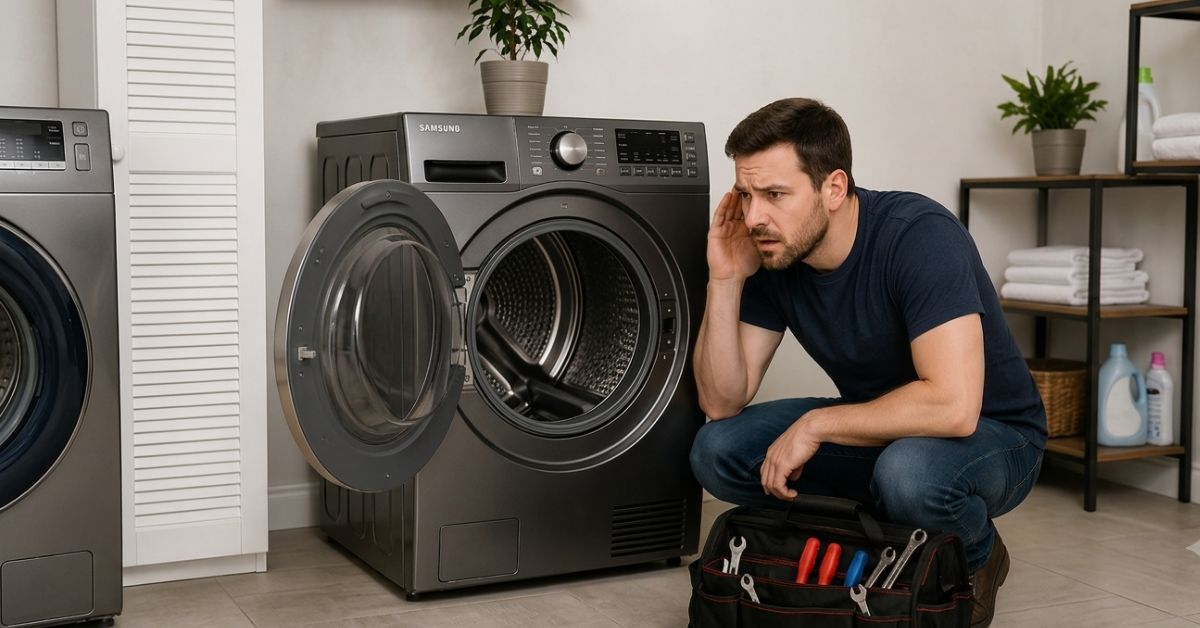
Common reasons your Samsung dryer is making noise
Worn drum support rollers
Most Samsung models rest the drum on a set of small rollers. They flatten or wear a groove into themselves after a few years, and the result is a rhythmic thump that speeds up as the drum spins. It’s one of the more common reasons people search for dryer repair near them.
Damaged drum belt
A belt that’s stretched, frayed, or slipping tends to produce a slapping or high squeal. If it’s gone loose enough, the drum may wobble slightly as it turns, putting more load on the motor than it was built for.
Failing idler pulley
The idler pulley keeps tension on the drive belt. Once the bearing inside wears down, you’ll hear a sharp squeal, usually loudest right at startup.
Glide bearing or felt seal wear
This sits at the front of the drum and cuts down on friction. When it goes, the sound is more of a scrape or grind than a squeal, and it worsens the longer the cycle runs.
Foreign objects in the drum
A stray coin, button, or kid’s toy can work past a pocket and end up wedged between the drum and the cabinet wall. You’ll know it when you hear it: a sharp clank, once per rotation.
Blower wheel issues
If lint has built up around the fan housing or the wheel is cracked, expect a buzz or whir, sometimes with a faint burning smell if it’s gone unaddressed.
How to figure out the noise before calling for help
Run the dryer empty for about a minute and just listen. It sounds basic, but it works:
- Squeaking – idler pulley or worn rollers
- Thumping – flattened rollers, or possibly an unbalanced load
- Grinding – glide bearing or drum slide
- Clanking – something’s loose in the drum; check first
- Buzzing – blower wheel or motor area
Narrowing it down this way makes the call to a technician faster, since you’re not just saying “it’s making a weird noise.”
Why putting off dryer repair costs more later
A noisy dryer isn’t just annoying background noise. Worn rollers or a slipping belt that go unfixed can chew into the drum seal or strain the motor past the point of an easy fix. What starts as a cheap roller swap on a routine dryer repair visit can end up as a full motor replacement if it sits long enough.
Samsung dryer repair tends to involve brand-specific parts. These models use sealed bearing assemblies and a belt tensioning setup different from GE or Whirlpool units, so a generic part often doesn’t last, and you end up paying for the repair twice.
What you can check yourself, and what you can't
A few things are fair game for a DIY check before booking dryer repair:
- Clean out the lint trap and exhaust vent, the most overlooked cause of dryer issues
- Check inside the drum for anything that fell out of a pocket
- Take a look at visible belts and rollers if you’re already comfortable popping the back panel off
Past that, you’re getting into territory where the dryer needs to be unplugged, the cabinet partially taken apart, and the right replacement part on hand. That’s usually where a trained eye saves you time and a few skinned knuckles.
When it's time to call someone
If your Samsung dryer making noise is still happening after you’ve cleaned the vent and checked for loose objects, you’re probably looking at a mechanical issue rather than something basic maintenance will solve. A technician who’s seen the model before can usually narrow it down within a few minutes and replace the right part the first time, instead of guessing.
Get your Samsung dryer fixed today
A dryer that’s making noise doesn’t quiet down on its own, and running it under strain for weeks rarely ends well for the motor. If you’ve gone through the checks above and the sound is still there, get it looked at before it gets worse. Dryer Repair handles diagnostic and repair work for Samsung dryers across the city. Call 647-793-5249 to get a technician out and your dryer back to running quietly.


